LIVIGNO, Italy — The ones who know, they’ll talk about the words for a long time. Yet, if you didn’t know better – and let’s be honest, most of us would not – they’d sound like some complicated play call an NFL quarterback relays in the huddle:
Left nose butter triple cork 2160 safety.
In freestyle skiing, this is known by another term: Progression.
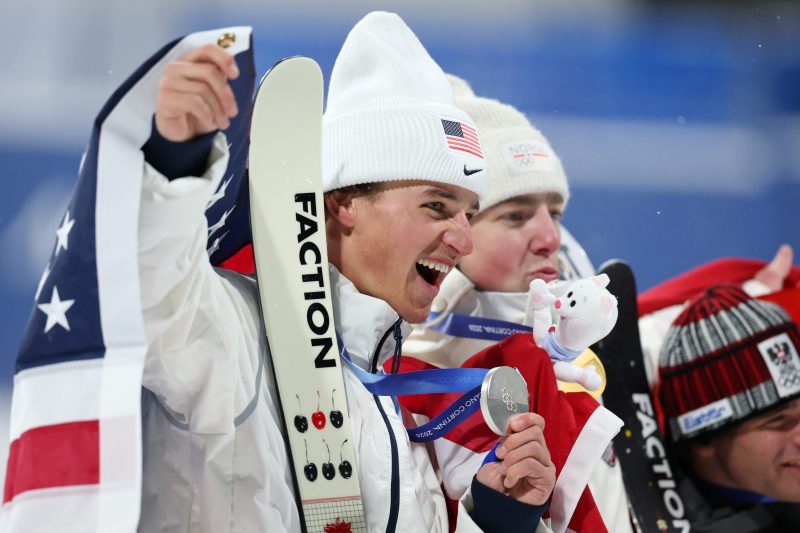
A new move. A trick so deliciously enticing that Team USA’s Mac Forehand raised both arms and stood with his mouth agape when he landed it cleanly, floored that he’d been able to pull it off at all, much less with an Olympic gold medal on the line. He’d never even practiced it before, he said afterward.
“The nose butter triple 21 has never been done before,” Forehand said. “It was the first night that it has been done – ever. Not even just in contests, I think. Ever.”
Um … ever?
That’s awfully good, right? Seriously, what could be better?
A right nose butter double bio 1620 safety, evidently.
So it was in a snowy freeski men’s big air at Livigno Snow Park. It was one for the ages, right down to the final instant. Norway’s Tormod Frostad one-upped Forehand’s 98.25, getting a 98.50 on his final run to pull ahead of Forehand for good and for gold, winning this stunning duel where neither posted a score worse than a 95 in three attempts.
Truly, neither deserved to lose.
“I think I’m just being biased because he’s American,” said teammate Troy Podmilsak, who barely missed the podium in fourth, “but I really wanted to see (Forehand) on the top spot. I thought maybe he did deserve the top spot. But, I mean, I’m not a judge. And I’m not trying to take anything away from Tormod, either. He skied great.”
Going by the scores, this was the best big air event freestyle skiing has experienced. The judges certainly thought so from their vantage points. Of the 36 scores awarded to the 12 finalists’ three runs, a whopping 15 were 90-plus.
Which was a little surprising, given what had come down in Livigno in the 48 hours leading up the event: Snow!
So much snow. Call it a foot, 18 inches even. The snow just kept falling, and that continued all the way through this event, which went on as planned on a day when everything else on Livigno’s Olympic schedule was postponed by the weather.
Once this big air event started? Outstanding.
Podmilsak was good enough to have a shot to win. He counted scores of 94.00 and 90.50. Fifth-place Konnor Ralph, another American, had a 91.50. Norway’s Birk Ruud, who finished eighth, opened with a 95.00.
The judges perhaps backed themselves into a corner by awarding so many high scores early.
There wasn’t much room to improve.
But wasn’t this the awesomeness you want from an Olympic competition? For the top contenders to push themselves and redefine the sport’s limits in order to win?
Forehand said it was “terrifying” to stand atop the ramp before his final attempt and plan a trick he’d never done before – no one else either. “You don’t really know how it’s going to work,” he said.
What Forehand did was special, and it’s easy to just look at numbers and see “2160” for him and “1620” for Frostad and assume Forehand’s should have been rated as more difficult, because he rotated more.
But, as Forehand explained, it isn’t that simple.
“His tricks aren’t a lot of rotating and a lot of spinning,” Forehand said of Frostad. “… But the way he does it and the approach on takeoff is so unique and so different. I don’t think anyone has ever done (his) two tricks, either, before. It’s cool to see that, and it’s good for our sport. We can only spin so much.”
“It’s the worst job to be a judge,” said Ralph, Forehand’s U.S. teammate. “… How do you decide what’s harder when you’ve never done anything?’
Reach sports columnist Gentry Estes at gestes@gannett.com and hang out with him on Bluesky @gentryestes.bsky.social